
Uncategorized
Yamaha F150 Problems: Common Issues, Symptoms & Solutions
Aug
Yamaha F150 Problems: Common Issues, Symptoms & Solutions
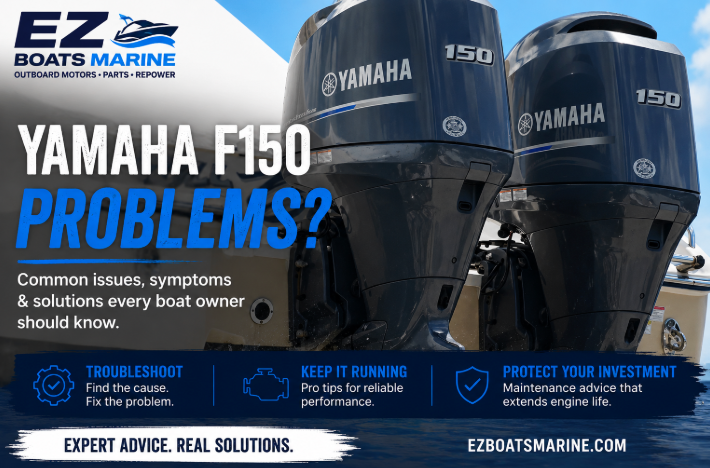
The Yamaha F150 is a popular 150-horsepower four-stroke outboard used on fishing boats, center consoles, pontoons and many other recreational boats.
Like any outboard motor, the Yamaha F150 can develop problems as it ages or when maintenance is neglected. Some issues are relatively simple to diagnose, while others may require professional inspection and specialized diagnostic equipment.
If your Yamaha F150 is hard to start, overheating, losing power, running rough or struggling to reach its normal RPM, understanding the symptoms can help you determine where to begin.
In this guide, we’ll look at common Yamaha F150 problems, their possible causes and the checks you can perform before replacing expensive components.
1. Yamaha F150 Won’t Start
One of the most frustrating situations for any boat owner is turning the key and finding that the Yamaha F150 won’t start.
The first step is determining whether the engine cranks but doesn’t start or doesn’t crank at all.
If it doesn’t crank, check:
- Battery condition
- Battery terminals
- Ground connections
- Starter circuit
- Ignition switch
- Safety/engine-stop circuit
If the engine cranks normally but doesn’t start, investigate the fuel and ignition systems.
Possible causes include:
- Old or contaminated fuel
- Fuel-delivery problems
- Faulty fuel pump
- Spark or ignition problems
- Electrical faults
- Engine-management issues
Avoid replacing components before determining what system is actually causing the problem.
2. Yamaha F150 Overheating
Overheating is a problem that should never be ignored.
The cooling system must maintain proper engine temperature during operation. If water flow is restricted or a cooling component fails, the engine can overheat and may activate an engine protection strategy.
Possible causes include:
- Worn water-pump impeller
- Blocked water intake
- Debris in the cooling system
- Thermostat problems
- Restricted cooling passages
- Water-pump problems
If your Yamaha F150 suddenly develops an overheating warning, reduce operation and investigate the cause.
Boats operating in shallow, weedy or sandy water may be particularly exposed to debris entering the cooling-water intake.
3. Yamaha F150 Losing Power
Is your Yamaha F150 running normally at idle but losing power when you accelerate?
This can be caused by several different problems.
Fuel delivery is one of the first areas to investigate. A restricted filter, fuel-line problem, contaminated fuel or fuel-pump issue can prevent the engine from receiving enough fuel when demand increases.
Other possibilities include:
- Fuel injector problems
- Ignition faults
- Sensor or engine-management problems
- Overheating
- Propeller problems
- Restricted fuel supply
- Mechanical problems
Pay attention to the engine RPM.
If the engine itself is losing RPM, the problem may be related to engine performance.
If the engine RPM increases but boat speed does not increase accordingly, investigate the propeller and propulsion system as well.
4. Yamaha F150 Won’t Reach Full RPM
A Yamaha F150 that runs but doesn’t reach its expected wide-open-throttle RPM range doesn’t necessarily have a failing engine.
The propeller and boat setup should be considered.
A propeller with too much pitch can place excessive load on the engine and prevent it from reaching the appropriate RPM.
Other potential causes include:
- Damaged propeller
- Incorrect propeller selection
- Excessive boat load
- Fuel restrictions
- Ignition problems
- Injector problems
- Engine-management faults
- Mechanical problems
Before replacing major engine components, make sure the propeller is correctly matched to the boat and engine.
5. Yamaha F150 Rough Idle
A Yamaha F150 that runs but idles roughly may have a fuel, ignition or air-related problem.
Potential causes include:
- Fouled or worn spark plugs
- Fuel contamination
- Injector problems
- Fuel-pressure problems
- Sensor issues
- Electrical faults
- Air leaks
- Carbon buildup
Pay attention to whether the rough idle occurs only when the engine is cold or continues after it reaches operating temperature.
That information can help narrow down the possible cause.
6. Yamaha F150 Fuel Problems
Fuel quality can have a major effect on outboard performance.
Gasoline can deteriorate during long periods of storage, while water and contaminants can enter the fuel system.
Fuel-related problems can produce symptoms such as:
- Hard starting
- Stalling
- Rough running
- Poor acceleration
- Loss of power
- Difficulty reaching full RPM
If a Yamaha F150 has been sitting unused for an extended period, inspect the fuel system before assuming there is an engine failure.
Fuel filters, fuel lines and other fuel-system components should also be inspected as part of routine maintenance.
7. Yamaha F150 Warning Alarms
If your Yamaha F150 displays a warning or produces an alarm, don’t simply reset it and continue operating the boat without understanding why it occurred.
Modern outboards use monitoring systems to detect potentially harmful operating conditions.
Depending on the model and situation, warnings may relate to conditions involving:
- Engine temperature
- Oil pressure
- Charging system
- Engine management
- Other monitored systems
The exact meaning of a warning depends on the specific Yamaha model and its instrumentation.
Always identify the cause before returning to normal operation.
8. Yamaha F150 Charging or Electrical Problems
Electrical problems can create symptoms that initially appear to be engine problems.
If the battery repeatedly goes flat, starting becomes difficult or electrical equipment behaves abnormally, inspect the charging and electrical systems.
Check for:
- Weak battery
- Loose battery terminals
- Corroded connections
- Damaged wiring
- Poor grounds
- Charging-system faults
Marine environments can be particularly hard on electrical connections.
Regular inspection and cleaning of appropriate electrical connections can help prevent avoidable problems.
9. Yamaha F150 Excessive Vibration
A Yamaha F150 that suddenly develops excessive vibration should be investigated.
Start with the propeller.
A damaged blade, bent propeller, damaged hub or debris around the propeller can create significant vibration.
If the propeller appears to be in good condition, other possible causes may include:
- Propeller-shaft damage
- Lower-unit problems
- Bearing issues
- Engine mounting problems
- Mechanical faults
If the vibration began immediately after hitting an underwater object, have the propeller and lower unit inspected before continuing normal operation.
10. Yamaha F150 Lower Unit Problems
The lower unit, or gearcase, transfers engine power to the propeller.
A problem with the lower unit can produce symptoms such as:
- Grinding or whining noises
- Difficulty shifting
- Gear oil leaks
- Water in gear oil
- Excessive vibration
- Loss of propulsion
Regularly inspecting the lower-unit oil is an important part of outboard maintenance.
Milky or cloudy gear oil can indicate water contamination, while significant metal particles may indicate internal wear or damage.
Fishing line wrapped around the propeller shaft can also damage seals and potentially allow water into the gearcase.
If you suspect lower-unit damage, have it inspected before continued operation causes additional damage.
How to Troubleshoot a Yamaha F150
When diagnosing an outboard problem, don’t immediately start replacing expensive components.
Work through the basics first.
Check the battery
Make sure the battery is adequately charged and that the terminals, cables and grounds are clean and secure.
Check the fuel
Confirm that the fuel is fresh and investigate possible contamination.
Check the propeller
Inspect the propeller for damage and confirm that its specifications are appropriate for the boat and engine.
Check the cooling system
Make sure the water intake is clear and investigate any overheating warnings.
Check engine oil
Verify the oil level and investigate any unusual oil-related warnings or symptoms.
Check the lower unit
Inspect gear oil for leaks, water contamination and excessive metal debris.
Check warning indications
Don’t ignore warning lights or alarms. Determine what triggered the warning before continuing normal operation.
How Reliable Is the Yamaha F150?
The Yamaha F150 has become a popular choice among boat owners, but the reliability of an individual engine depends heavily on its maintenance history, operating conditions, storage and overall condition.
A well-maintained older F150 can potentially be a better purchase than a newer engine that has been poorly maintained.
When buying a used Yamaha F150, consider:
- Engine hours
- Service history
- Compression
- Cooling-system condition
- Lower-unit condition
- Gear oil
- Propeller
- Electrical system
- Corrosion
- General maintenance
Don’t judge a used outboard solely by its appearance or model year.
When Should You Repair or Replace a Yamaha F150?
Not every Yamaha F150 problem requires a replacement engine.
A relatively straightforward issue involving a spark plug, fuel component, water-pump component, propeller or electrical connection may be repairable without major expense.
However, significant internal engine damage, severe corrosion or multiple major failures can change the economics.
When repair costs become substantial, compare:
Cost of repairing the existing Yamaha F150
versus
Cost of a suitable used, rebuilt or replacement outboard.
The right choice depends on the engine’s condition, parts availability, labor costs and the value of the boat.
Frequently Asked Questions
What are the most common Yamaha F150 problems?
Common issues can include starting problems, overheating, fuel-delivery problems, loss of power, rough running, electrical problems, propeller issues and lower-unit problems.
Why is my Yamaha F150 losing power?
Possible causes include restricted fuel delivery, contaminated fuel, ignition problems, overheating, injector issues, propeller problems or mechanical faults.
Why is my Yamaha F150 overheating?
Possible causes include a worn water-pump impeller, blocked water intake, thermostat problems or restrictions within the cooling system.
Why won’t my Yamaha F150 start?
First determine whether the engine cranks. If it doesn’t crank, investigate the battery and electrical system. If it cranks but doesn’t start, investigate fuel delivery, ignition and engine-management systems.
How do I know if my Yamaha F150 lower unit is bad?
Grinding noises, water in gear oil, oil leaks, difficulty shifting, excessive vibration and loss of propulsion can all indicate a lower-unit problem.
How can I prevent Yamaha F150 problems?
Following the manufacturer’s recommended maintenance schedule, using appropriate fluids and fuel, inspecting the cooling and fuel systems, checking the lower-unit oil and addressing warning signs early can help maintain reliable operation.
Final Thoughts
The Yamaha F150 is a capable and widely used outboard, but proper maintenance is essential for long-term reliability.
Whether your engine is losing power, overheating, running rough, refusing to start or developing lower-unit problems, identifying the symptoms is the first step toward finding the right solution.
Before buying a replacement component, always verify compatibility using the exact model and serial number, rather than relying on horsepower alone.
Need Help With Your Yamaha Outboard?
EZ Boats Marine supplies Yamaha outboard motors, lower units, marine parts and repower solutions.
If you need help identifying a replacement component, send us your Yamaha model number, serial number, horsepower and shaft length, along with photos where possible.
Contact EZ Boats Marine for assistance with availability, compatibility and shipping options.
