
Outboard Lower Units & Gearcases
How to Tell If Your Outboard Lower Unit Is Bad: 10 Warning Signs
Aug
How to Tell If Your Outboard Lower Unit Is Bad: 10 Warning Signs
The lower unit, also called the gearcase, is one of the most important mechanical components on an outboard motor.
It transfers power from the engine to the propeller and contains critical components such as the gears, bearings, driveshaft, propeller shaft and water pump assembly.
When a lower unit begins to fail, ignoring the warning signs can turn a repairable problem into a much more expensive replacement.
So how do you know if an outboard lower unit is bad?
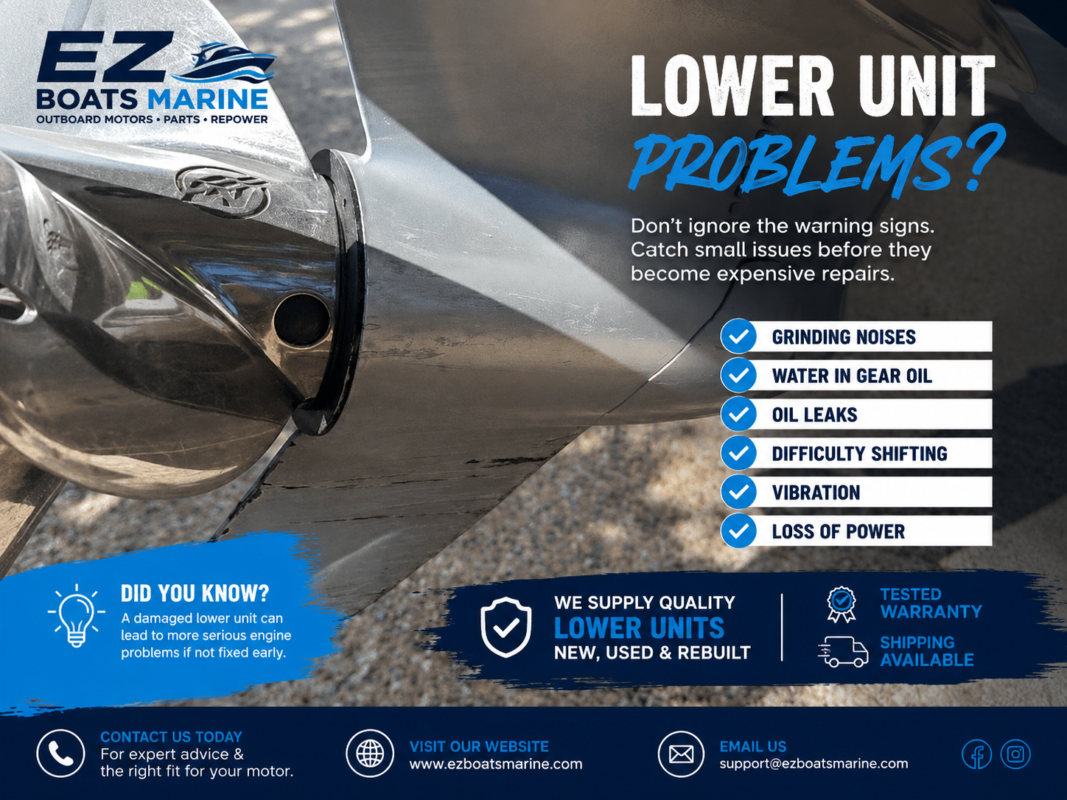
There are several symptoms you can look for, including grinding noises, difficulty shifting, leaking gear oil, water contamination, vibration and loss of propulsion.
Here are 10 warning signs that your outboard lower unit may need attention.
1. Grinding or Whining Noises
One of the most obvious signs of a lower-unit problem is an unusual mechanical noise.
A healthy gearcase should operate relatively smoothly. If you hear grinding, whining, knocking or excessive mechanical noise coming from the lower unit, the gears or bearings may be worn or damaged.
Possible causes include:
- Worn gears
- Damaged bearings
- Insufficient lubrication
- Incorrect gear oil
- Internal gearcase damage
A new or increasingly loud noise should never be ignored.
2. Water in the Lower Unit Oil
Water contamination in the gear oil is a serious warning sign.
When you drain the gearcase oil, healthy oil should generally have a consistent appearance appropriate to the lubricant being used.
If the drained oil appears milky, cloudy or emulsified, water may have entered the gearcase.
Water can enter through damaged or worn seals around areas such as:
- Propeller shaft
- Driveshaft
- Shift shaft
- Drain/fill screw seals
Operating a gearcase with water-contaminated lubricant can cause corrosion and accelerate bearing and gear failure.
A pressure and vacuum test can help identify where the leak is occurring.
3. Gear Oil Leaking From the Lower Unit
Visible oil around the lower unit is another warning sign.
Don’t automatically assume that every oil leak means the entire gearcase has failed. A damaged seal, drain-plug gasket or other sealing component may be responsible.
However, any unexplained gear-oil leak should be investigated.
If the gearcase loses enough lubricant, internal gears and bearings can operate without adequate lubrication, potentially causing severe damage.
4. Difficulty Shifting Into Forward or Reverse
Does your outboard struggle to shift into gear?
Or does it jump out of gear while you’re operating the boat?
This can indicate a problem with the shift linkage, but it can also point toward internal gearcase problems.
Possible causes include:
- Misadjusted shift linkage
- Worn clutch dog
- Damaged gears
- Shift shaft problems
- Internal gearcase wear
Proper diagnosis is important because a shifting problem isn’t always caused by the lower unit itself.
5. The Engine Revs but the Boat Doesn’t Accelerate
If the engine RPM increases but the boat doesn’t accelerate as expected, there could be a problem with the propeller or its hub.
A damaged or slipping propeller hub can produce symptoms that appear to be an engine or lower-unit problem.
However, if the propeller and hub are known to be good, further investigation of the propeller shaft and gearcase may be necessary.
6. Excessive Vibration
Unexpected vibration from the rear of the boat can be another indication of a problem.
Potential causes include:
- Bent propeller
- Damaged propeller hub
- Bent propeller shaft
- Damaged bearings
- Internal gear damage
- Debris around the propeller
Start by inspecting the propeller because it is one of the easiest things to check.
If the propeller is in good condition and the vibration continues, the lower unit should be inspected.
7. Metal on the Drain-Plug Magnet
Many outboard gearcases use a magnetic drain plug designed to collect small metallic particles.
A small amount of fine metallic material can occur from normal wear.
However, large metal particles, chunks of metal or excessive debris can indicate internal gear or bearing damage.
When changing lower-unit oil, pay attention to what comes out of the gearcase rather than simply replacing the lubricant and ignoring the condition of the old oil.
8. Propeller Shaft Damage
The propeller shaft is exposed to impacts and underwater hazards.
Hitting rocks, submerged objects or other debris can bend or damage the shaft.
A bent propeller shaft can result in:
- Vibration
- Seal damage
- Propeller wobble
- Gearcase leaks
- Premature bearing wear
Even if the lower unit appears visually intact, a hard underwater impact warrants an inspection.
9. Lower Unit Is Overheating
The lower unit itself relies on proper lubrication and water circulation around the appropriate components.
Problems with the water pump or water passages can also affect the overall outboard cooling system.
If your engine is overheating or the telltale water stream has become weak or inconsistent, investigate the cooling system promptly.
A worn water-pump impeller is a common maintenance item, but other cooling-system restrictions can also occur.
10. Complete Loss of Forward or Reverse
A sudden loss of propulsion is one of the most serious signs of a potential gearcase failure.
If the engine runs and the propeller does not behave as expected when shifting into gear, the problem could involve the propeller, hub, shift mechanism or internal gears.
Internal gear damage can occur from:
- Low gear oil
- Water contamination
- Impact damage
- Normal wear
- Incorrect assembly
- Lack of maintenance
At this point, continued operation should be avoided until the problem has been diagnosed.
How to Check an Outboard Lower Unit
If you suspect a problem, there are several basic checks you can perform.
Check the gear oil
Drain the lower unit oil and inspect its condition.
Look for:
- Milky oil
- Excessive metal particles
- Unusual contamination
- Very low oil level
Inspect the propeller
Remove the propeller and inspect the shaft area.
Look for fishing line wrapped around the shaft, which can damage seals and allow water to enter the gearcase.
Inspect for external damage
Look for:
- Cracks
- Impact marks
- Corrosion
- Missing material
- Bent components
Check for leaks
Inspect around the propeller shaft, driveshaft area and drain/fill plugs for signs of lubricant leakage.
Pressure-test the gearcase
A proper lower-unit pressure test is one of the best ways to identify sealing problems.
This is particularly important if the gear oil is contaminated with water.
Should You Repair or Replace an Outboard Lower Unit?
This depends on the extent of the damage.
A relatively minor problem such as a leaking seal may be repairable without replacing the complete gearcase.
However, if the lower unit has significant gear, bearing or housing damage, a complete replacement may make more financial sense.
When comparing repair versus replacement, consider:
Repair costs + parts + labor + downtime
versus
Replacement lower unit + installation + shipping
For older outboards, replacement parts can also become difficult to locate. A properly matched used, rebuilt or remanufactured lower unit may therefore be a practical alternative.
Don’t Buy the Wrong Lower Unit
One of the biggest mistakes when replacing an outboard lower unit is assuming that horsepower and shaft length are enough to guarantee compatibility.
They aren’t.
Two outboards with the same horsepower and shaft length can have different gearcases.
Before purchasing a replacement lower unit, verify:
- Engine manufacturer
- Horsepower
- Model number
- Serial number
- Year/model range
- Shaft length
- Gear ratio
- Rotation
- Standard vs. BigFoot or other gearcase configuration
- Driveshaft specifications
- Shift-shaft configuration
- Propeller-shaft specifications
This is especially important when buying a lower unit online.
Used, Rebuilt or Remanufactured Lower Unit?
There are several replacement options available.
Used Lower Unit
A used gearcase can be an economical option, particularly for older outboards.
However, its internal condition needs to be verified.
Rebuilt Lower Unit
A rebuilt unit may have selected internal components replaced or repaired.
The extent of the rebuild can vary between sellers, so always ask what work was performed.
Remanufactured Lower Unit
A remanufactured unit is generally restored to an established specification using replacement components where necessary.
When comparing units, don’t look at price alone. Consider the condition, testing, included components and warranty.
Final Thoughts
A failing lower unit can quickly turn into one of the more expensive outboard repairs if the warning signs are ignored.
Grinding noises, contaminated gear oil, oil leaks, shifting problems, excessive vibration, metal particles and loss of propulsion should all be investigated.
The good news is that many lower-unit problems can be identified before complete failure occurs.
If you are unsure whether your lower unit needs repair or replacement, having the gearcase properly inspected can help you make the right decision.
Need Help Finding the Correct Lower Unit?
EZ Boats Marine supplies outboard motors, lower units and marine parts for a wide range of applications.
If you’re looking for a replacement lower unit, send us your make, horsepower, model number, serial number and shaft length. Photos of your existing unit can also help us determine the correct configuration.
Contact EZ Boats Marine to check compatibility, availability and shipping options before purchasing.
